


Gum problems often develop much more discreetly than cavities. A decayed tooth can start to hurt, whereas periodontal disease can progress for an extended period with minimal symptoms or even no pain at all. This is precisely why early diagnosis is essential. According to the European Federation of Periodontology, gingivitis and periodontitis represent two distinct stages of gum disease: gingivitis primarily affects the gum tissue, while periodontitis also involves the supporting structures of the tooth, including the alveolar bone.
Bleeding gums are not normal
One of the earliest signs that many people ignore is blood observed during brushing or when using dental floss. “My gums are bleeding because I brushed too hard” or “it’s normal as long as it doesn’t hurt” are common yet misleading explanations.
Healthy gums should not bleed during brushing. Bleeding can indicate gingivitis, which is gum inflammation primarily caused by the accumulation of bacterial plaque. At this stage, the process is generally reversible through improved oral hygiene and the professional removal of bacterial deposits. The problem arises when inflammation is left untreated.
Gingivitis or periodontitis: what is the difference?
Gingivitis affects the gingival tissue without the loss of structures that secure the tooth. With proper care and professional treatment, the gum can return to a healthy state.
Periodontitis, commonly referred to in everyday language as “pyorrhea,” is a deeper condition. The inflammation is associated with the destruction of the periodontal ligament and the bone supporting the tooth. Once bone loss has occurred, it cannot simply be restored through better brushing alone. That is why understanding what periodontitis is correctly matters: it is not merely a gum problem, but a disease of the tooth-supporting tissues.
An accurate diagnosis requires examining the gums, measuring periodontal pockets, and, when indicated, radiographic investigations to evaluate bone levels. European guidelines recommend clinical and radiological assessments tailored to each patient’s situation.
How tartar can destroy bone without pain
The process begins with dental plaque. If it is not adequately removed, it mineralizes and forms dental tartar. Unlike soft plaque, tartar cannot be removed by simple home brushing.
Over time, deposits can extend beneath the gumline. This leads to the formation of pathological spaces known as periodontal pockets, where bacteria accumulate and sustain inflammation. The process can continue advancing toward deeper tissues and the alveolar bone.
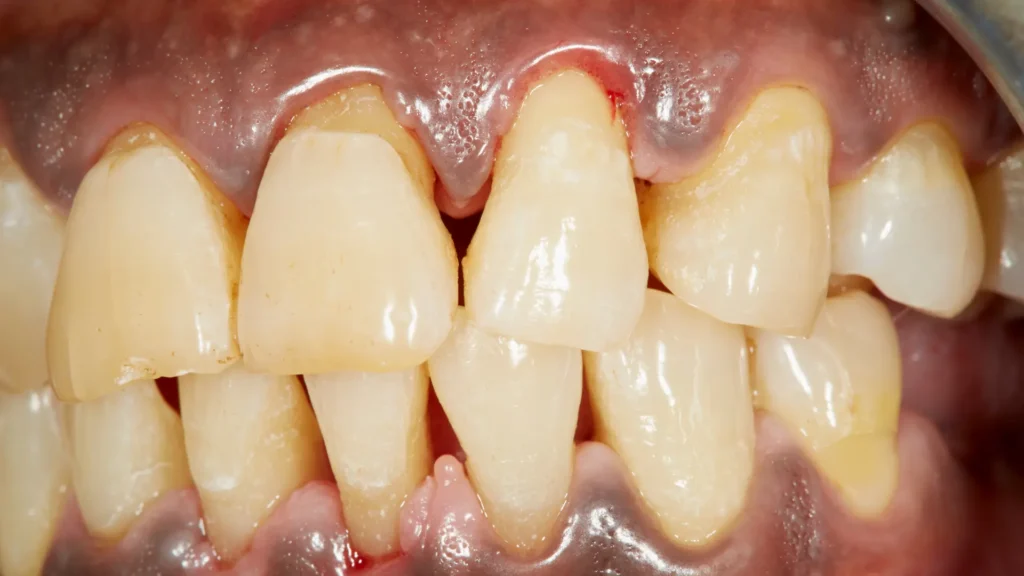
The deceptive aspect is that bone loss can progress without obvious pain. A patient may only notice that gums bleed, teeth appear longer, or persistent bad breath develops. In more advanced stages, teeth may become loose or shift positions.
What signs should prompt a visit to the doctor?
A dental consultation is recommended if you notice:
-
gums that bleed frequently;
-
red, swollen, or tender gums;
-
receding gums;
-
persistent bad breath;
-
teeth that have begun to loosen;
-
new gaps appearing between teeth;
-
discomfort while chewing;
-
discharge or swelling in the gum area.
A marginal periodontal abscess, for example, can appear in the context of a localized infection and requires professional medical evaluation rather than home remedies.
Dental scaling is not just a cosmetic procedure
Dental scaling and tartar removal play a crucial role in controlling local factors that perpetuate inflammation. In cases of periodontal disease, professional cleaning may also include the removal of subgingival deposits from root surfaces. EFP guidelines recommend a phased approach, and subgingival instrumentation is an essential component of periodontitis treatment.
However, scaling should not be confused with periodontitis treatment as a whole. Depending on the stage of the disease, comprehensive management may require a full periodontal assessment, professional cleaning, subgingival instrumentation, ongoing monitoring, and, in advanced cases, adjunctive procedures or surgical intervention.
How to protect your gums at home
Good oral hygiene begins with brushing twice daily and cleaning the spaces between your teeth. If you wonder how to use dental floss, proper technique is key: it should be inserted gently between the teeth and guided along the tooth surfaces without snapping aggressively against the gum.
Selecting an appropriate toothpaste and scheduling regular teeth cleaning sessions complement your daily routine. However, home oral care cannot remove calculus that has already formed subgingivally.
When is treatment needed?
The earlier periodontitis is identified, the higher the chances of managing the condition and preserving your natural teeth. Periodontitis treatment is determined based on the disease stage and individual patient characteristics, rather than a one-size-fits-all plan. International guidelines recommend thorough evaluation, staged treatment, and regular reassessment.
In cases where bone loss is significant, regenerative procedures—including certain types of dental bone graft—may be considered, but indication is strictly established following detailed investigations and specialist evaluation.
At Imperial Dent, evaluating gum conditions is part of a comprehensive approach to oral health. A dental clinic in Chișinău equipped for diagnostics and specialized care can identify pathological changes before they lead to tooth loss. For patients seeking dentistry in Botanica or elsewhere in the capital, a timely consultation with a periodontist dentist can make the difference between simple prevention and complex, extensive treatment.
The most important takeaway is simple: if your gums are bleeding, do not wait for pain. Bleeding is an unmistakable sign for evaluation, and early diagnosis offers the best opportunity to control the disease and safeguard your teeth and gum health.