

Wisdom teeth often create problems. No one can predict with certainty when they will erupt, how they will emerge, or whether they will have a negative impact. It might seem that extra teeth could do no harm, but their spatial relationship with adjacent structures—existing molars, nearby nerves and vessels, and even the supporting bone—is frequently problematic, making their arrival far from welcome. Neutral cases do exist, but how do you know if you specifically need a dentist’s intervention to resolve wisdom tooth complications?
1. Swollen gums and persistent pain in the back of the mouth
One of the most common indicators that a wisdom tooth (clinically known as the third molar) is causing trouble is swollen gums, accompanied by pain or discomfort when chewing. This typically happens when the tooth lacks sufficient space to erupt properly and remains partially covered by gum tissue, creating a pocket where bacteria readily accumulate. In severe instances, an impacted tooth that cannot emerge can compromise the supporting bone structure—necessitating complex surgical intervention with a lengthy, uncomfortable recovery.
Most frequently, this inflammation can quickly progress into pericoronitis, a painful condition requiring oral surgical intervention. In such scenarios, the clinician may prescribe anti-inflammatory medication after extraction, with the definitive solution almost always being the removal of the compromised tooth. Proper clinical evaluation takes place in a dental clinic, where the doctor determines the severity of the inflammation and the appropriate therapeutic indication.
2. Tooth crowding and dental shifting
Another definitive sign pointing to the necessity of wisdom tooth extraction is dental crowding, particularly noticeable in the front teeth. The eruptive force and continuous pressure exerted by a wisdom tooth can cause gradual displacement and misalignment of previously straight teeth.
This complication is frequently noted by patients who have previously undergone orthodontic treatment. Without timely intervention, hard-earned orthodontic results can be compromised. In these cases, a dentist will recommend close radiographic monitoring and, where indicated, preventive extraction to avert further misalignment of the dental arch.
3. Recurrent infections and hygiene difficulties
Partially erupted wisdom teeth are notoriously difficult to clean effectively, facilitating bacterial plaque retention and recurrent infections. Patients often report foul breath, an unpleasant bitter taste, or repeated localized flare-ups in the posterior jaw.
Under these circumstances, even meticulous home brushing remains insufficient. Recurrent episodes of infection are a clear diagnostic signal that the wisdom tooth cannot be maintained in a healthy state over the long term. Gingivitis characterized by bleeding and tenderness serves as an immediate warning. During a clinical consultation in a dental clinic, the clinician evaluates the anatomy and recommends extraction to prevent wider-spreading complications.
4. Tooth decay or damage to adjacent molars
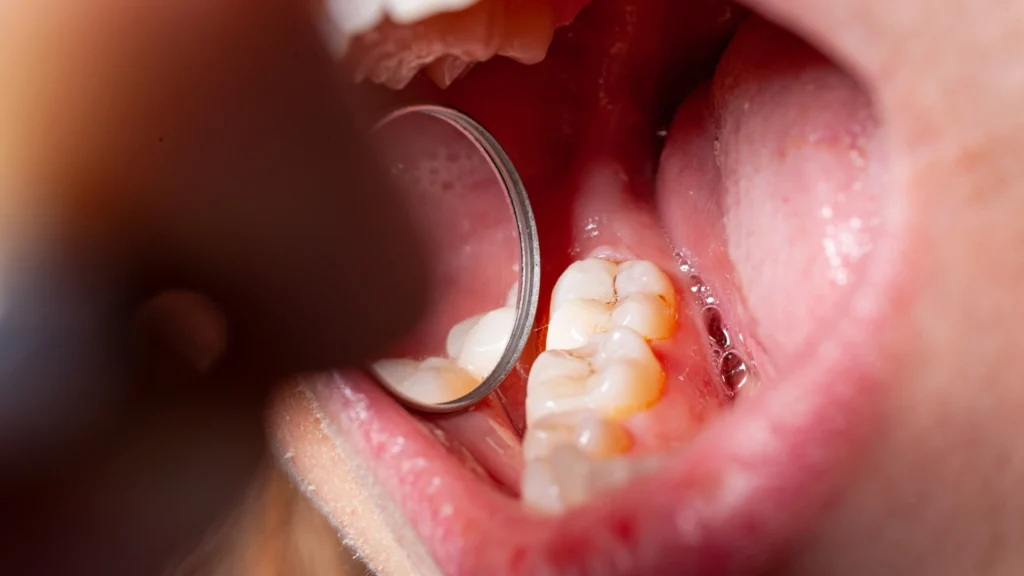
An improper eruption angle can cause direct pathology in the neighboring second molar. Due to restricted interdental space, food debris and bacteria pack tightly between the teeth, dramatically increasing the incidence of interproximal cavities and periodontal bone loss.
Establishing an accurate diagnosis requires a comprehensive dental X-ray, which visualizes the exact angulation of the third molar and its anatomical relationship to adjacent teeth. This diagnostic imaging is crucial for planning safe oral surgery. In many instances, extraction is indicated proactively before acute symptoms manifest, safeguarding otherwise healthy adjacent teeth from irreversible damage.
5. Incomplete eruption or abnormal positioning
Third molars frequently erupt in atypical orientations: mesially angled, horizontally impacted, or entirely trapped within alveolar bone. These scenarios, defined as dental impactions, generate chronic pressure, nerve impingement, and serious long-term complications.
A timely wisdom tooth extraction prevents issues such as dentigerous cysts, chronic osteitis, and extensive bone resorption. Today, the procedure is carried out under high-safety protocols in a dental clinic in Chișinău, such as Imperial Dent, utilizing modern techniques that minimize tissue trauma, discomfort, and recovery time.
It is worth noting that monitoring dental development should ideally begin during childhood. Although wisdom teeth typically erupt in early adulthood, a pediatric dentist can spot early developmental patterns and suggest routine follow-ups to anticipate future complications.
Recognizing these signs early and intervening at the right clinical moment prevents complex, expensive restorative issues down the road. A comprehensive evaluation by a specialist, backed by diagnostic tools like digital panoramic X-rays or dental CBCT, ensures an efficient, safe treatment protocol. Having an experienced oral surgeon handle the procedure is always a significant clinical advantage, especially in atypical or deeply impacted cases.