

The feeling of dry mouth, especially during summer, is more than a mild discomfort—it is a clear sign that the body’s homeostasis, the internal balance of well-being, has been disrupted.
Saliva – one of the most critical allies of oral health
Most people associate oral health primarily with regular brushing, flossing, and periodic visits to the dentist. While this is an excellent foundation, an essential biological factor often goes unnoticed: saliva. In restorative dentistry and cariology, saliva is recognized as the first line of defense against acid attacks and opportunistic oral pathogens.
When dry mouth occurs—clinically termed xerostomia—these natural protective mechanisms become significantly compromised. Lacking an adequate salivary flow, the risk of developing dental cavities increases sharply, disrupting the microbiological equilibrium of the oral cavity.
Coffee, energy drinks, and the fast pace of modern life
Today, many active professionals start their mornings with one or more cups of coffee. Throughout the day, relying on energy drinks or high-caffeine beverages frequently becomes an easy fix to fight mental and physical fatigue.
While these beverages offer temporary alertness, they act as mild diuretics and can contribute to dehydration and reduced salivary secretion. Furthermore, chronic stress—a hallmark of demanding modern lifestyles—alters autonomic nervous system regulation of the salivary glands, worsening oral dryness. Many notice only fleeting discomfort, unaware that chronic salivary hypofunction quietly undermines tooth and gum health over time.
Medications that contribute to dry mouth
Beyond lifestyle factors, numerous common medications list reduced salivary production as a side effect. These include certain antidepressants, antihistamines, antihypertensive drugs used to manage blood pressure, and oral hormonal contraceptives.
Patients on these regimens regularly experience a sticky sensation in the mouth, difficulty swallowing dry foods, or a persistent need to sip water throughout the day.
During a comprehensive dental consultation, an experienced dentist can evaluate these contributing factors and provide targeted protocols to protect the dentition.
How salivary reduction affects the oral microbiome
A lesser-known consequence of salivary hypofunction is its direct impact on the oral microbiome—the complex community of microorganisms naturally inhabiting the oral cavity.
Under normal physiological conditions, saliva buffers pH and maintains an essential equilibrium between commensal species and opportunistic pathogens. When salivary flow drops, acid-tolerant, cariogenic, and periopathogenic bacteria proliferate unhindered.
This dysbiosis often results in chronic bad breath, rapid plaque accumulation, and an increased vulnerability to periodontal disease.
Why risks of cavities and gum disease escalate
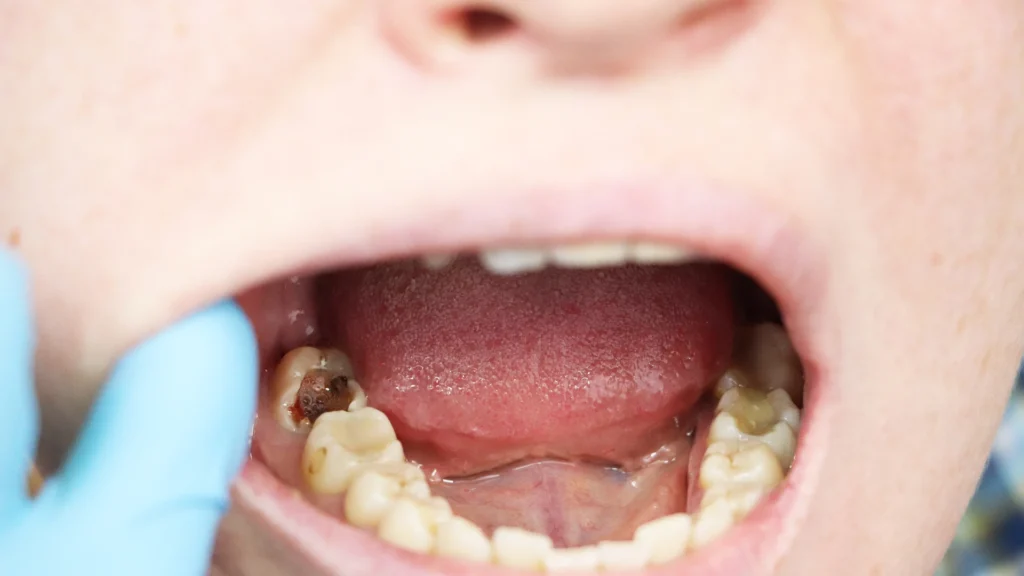
Saliva functions to neutralize dietary and bacterial acids while supplying calcium and phosphate ions critical for continuous enamel remineralization. Deprived of this natural shield, enamel demineralizes much faster under plaque biofilms.
Consequently, a dental cavity can progress rapidly, quickly reaching deeper dentin. In many cases, pulpal involvement follows, necessitating microscopic endodontic treatment to salvage the tooth.
Simultaneously, unhindered plaque and calculus buildup provoke marginal gingival inflammation. Without timely intervention, localized gingivitis can progress into advanced periodontitis—one of the primary causes of adult tooth loss.
The importance of routine evaluations and professional hygiene
Patients experiencing chronic dry mouth must adopt an active preventive strategy. Routine checkups with the dentist ensure early detection of subtle enamel demineralization and gingival changes.
At Imperial Dent, a modern dental clinic in Chișinău, diagnostic screening combines thorough clinical examinations with digital dental X-rays or 3D CBCT imaging to identify interproximal or root caries hidden from direct view.
In addition, professional dental cleaning and scaling are indispensable for removing calculus and reducing bacterial reservoirs. These clinical steps are vital even for those who use what they consider the best toothpaste, as home brushing alone cannot dislodge calcified tartar deposits beneath or along the gumline.
Modern solutions for lasting oral health
Modern dental care extends far beyond simply treating active decay; it emphasizes rigorous prevention and personalized risk management. Maintaining proper hydration, moderating caffeine and energy drink consumption, using saliva substitutes or remineralizing agents recommended by your doctor, and keeping routine dental visits are essential steps.
At a dental clinic in Chișinău such as Imperial Dent, patients receive comprehensive dental services tailored to their clinical needs. For patients who feel anxious about dental appointments, our pain-free treatment approach and advanced technology ensure a comfortable, safe, and stress-free clinical environment.
While a dry mouth may seem like an insignificant nuisance, its long-term effects on teeth and gums can be severe. Pinpointing the root causes and intervening early remains the most reliable strategy to prevent extensive, costly dental complications.