


Do you wake up in the morning with a tight jaw, headaches, or the impression that your teeth no longer touch the way they used to? Sometimes, these signs can indicate sleep bruxism – the involuntary clenching or grinding of teeth during sleep. The problem is that many people do not realize what happens at night until tooth wear, sensitivity, or muscle pain appear. At Imperial Dent, early evaluation of these symptoms can help identify risk factors and protect teeth before damage requires complex treatments.
How does bruxism affect enamel and your bite?
Enamel is the hard tissue that protects the surface of teeth, but it is not indestructible. During bruxism episodes, teeth can be subjected to repeated forces that promote wear of chewing surfaces, the appearance of cracks, and, in some cases, fracturing of fillings or tooth fragments.
Wear can progress slowly, without pain in the early stages. Over time, teeth can become more sensitive to cold, heat, or sweets, and their edges can take on a flattened appearance. If the loss of tooth structure is significant, a dental restoration may be necessary to restore form and function.
Bruxism does not automatically cause gum recession or periodontitis, but excessive occlusal forces can worsen discomfort in teeth already affected by periodontal issues. Gum recession also has other causes, including inflammation, traumatic brushing, or anatomical factors, which is why they must be evaluated separately.
What is the link between stress, a clenched jaw, and dry mouth?
Stress and anxiety can be associated with more frequent teeth-clenching episodes, but bruxism has a complex origin. Contributing factors include nervous system activity during sleep, certain medications, alcohol or caffeine consumption, and some sleep disorders.
But what do stress and dry mouth have in common? These two problems can occur at the same time, yet oral dryness is not a universal cause of bruxism. Saliva helps protect teeth and maintain oral balance, and reduced saliva production can increase the risk of cavities and discomfort. If you frequently wake up with a dry mouth, it is useful to mention this during your consultation.
Signs that may indicate bruxism include soreness or tiredness in the chewing muscles in the morning, tooth sensitivity, pain around the temples, grinding sounds noticed by a partner, and unusual tooth wear.
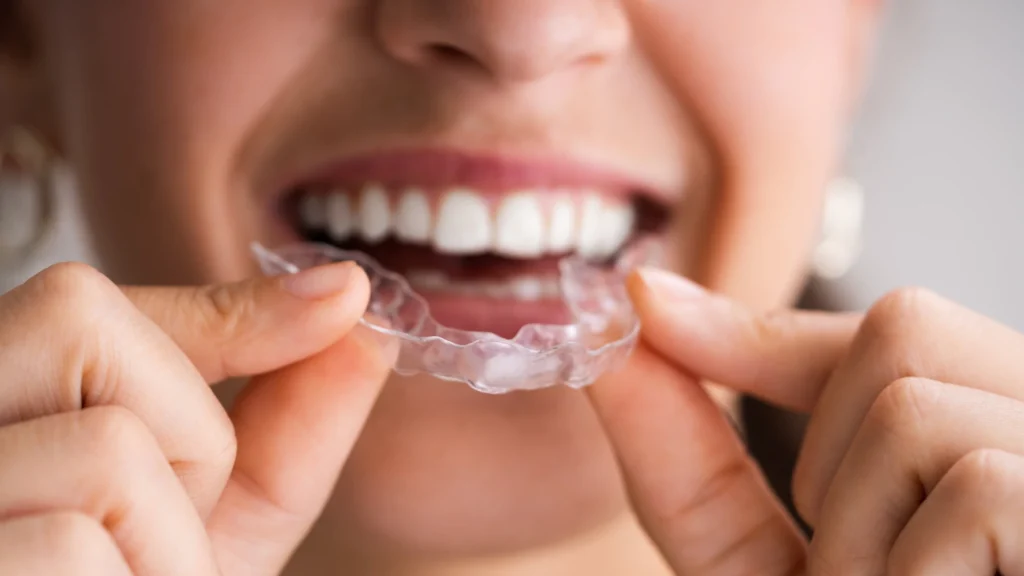
Night guard: how does it protect your teeth?
One of the solutions frequently used to manage bruxism is an individually crafted occlusal night guard. It creates a barrier between the dental arches and helps protect tooth surfaces from direct contact. It can help reduce wear and, in certain situations, alleviate muscular symptoms.
It is important to understand that a night guard does not necessarily eliminate the cause of bruxism and does not guarantee the disappearance of nocturnal episodes. Its main role is protective, and the type of device and how it is used must be determined by a doctor. A digital dental impression can be used to precisely record the dental arches and produce a device tailored to the patient’s anatomy, if this method is available and indicated.
At the same time, reducing caffeine consumption toward the evening, limiting alcohol, keeping a regular sleep schedule, and practicing relaxation techniques can help. If a sleep disorder such as obstructive sleep apnea is suspected, additional medical evaluation may be required.
When are dental restorations or other treatments necessary?
If bruxism has already caused damage, the treatment plan depends on its extent. Some defects can be corrected with direct composite restorations, while teeth with substantial loss of structure may require a dental crown. In certain cases, dental veneers can correct selected aesthetic defects, though they are not a universal solution for wear caused by bruxism. Before any restoration, it is essential to manage risks and plan subsequent protection.
If alignment issues are also present, an orthodontist can evaluate whether there is an indication for dental braces or other methods of teeth straightening. However, orthodontic treatment is not, by itself, a guaranteed cure for bruxism.
In cases of gum inflammation or periodontitis, a separate periodontal treatment may be necessary. Treating these conditions is important for preserving the tissues that support the teeth, especially when excessive occlusal forces are also present.
The first step: a consultation at Imperial Dent
If you notice your teeth wearing down, experience jaw pain in the morning, or wake up with a clenched jaw, schedule a dentist consultation. The examination can identify signs of wear, cracks, gum issues, and bite changes, and the doctor will recommend suitable investigations and measures.
For people looking for dentistry in Chișinău, Botanica, Imperial Dent provides the opportunity to evaluate oral health and discuss protection and restoration options. Detecting bruxism before wear becomes severe can help preserve natural teeth and avoid more extensive procedures.