

Many people assume misaligned teeth are solely a cosmetic concern. The reality is far more complex: the way your upper and lower teeth meet—clinically defined as dental occlusion—profoundly affects the health of your entire dentition, the temporomandibular joints (TMJ), and even systemic well-being. At Imperial Dent Clinic, specialists regularly treat patients who are surprised to discover that chronic headaches, digestive issues, or premature tooth wear share a common origin: a malocclusion.
What is dental occlusion and why does it matter?
Dental occlusion refers to the contact relationship between maxillary and mandibular teeth when the jaws close together. In an ideal occlusion, teeth align seamlessly, masticatory force distributes evenly across the dental arch, and the jaw joints function without abnormal strain. When this balance is compromised, the entire stomatognathic system suffers, triggering a cascade of complications that may initially seem entirely unrelated to oral health.
The primary types of malocclusion
Malocclusions—deviations from normal anatomical occlusion—are classified into distinct categories, each posing specific risks to oral function.
Class I (crowding and malposition) occurs when the underlying jaw relationship is normal, but individual teeth are rotated, displaced, or overlapping. While it may appear primarily aesthetic, crowding creates tight, inaccessible niches that accelerate plaque accumulation and lead to caries in atypical locations.
Class II (retrognathism/overjet) features an upper jaw positioned significantly forward relative to the lower jaw, often creating the appearance of a receding chin in profile. Patients with this bite discrepancy frequently experience mouth breathing, sleep-disordered breathing, and accelerated enamel attrition on upper anterior teeth due to atypical contact angles.
Class III (prognathism/underbite) presents the opposite pattern—the mandible projects forward, resulting in an anterior crossbite. This severely compromises chewing efficiency, forcing patients into lateral compensatory jaw movements that provoke asymmetrical tooth wear and persistent TMJ pain.
Open bite occurs when opposing anterior teeth fail to meet when the mouth is closed. This condition impedes clear speech articulation, prevents incising food properly, and overburdens posterior molars, which are forced to bear the entire load of mastication alone.
Crossbite happens when one or more upper teeth bite inside the lower dental arch. Over time, untreated crossbites can cause noticeable facial asymmetries and force mandibular shifting, resulting in long-term joint degeneration.
During a comprehensive dental consultation, the clinician can identify the direct link between a malocclusion and non-specific symptoms the patient never attributed to their bite.
Why orthodontic treatment is not just for children
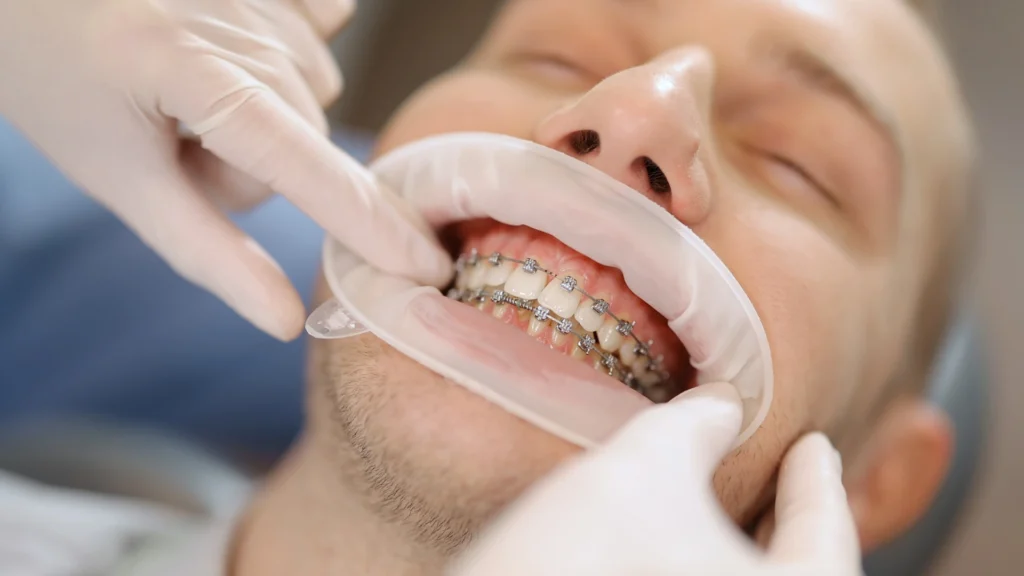
Many adults delay or decline orthodontic therapy under the misconception that they have “outgrown” the procedure. Biological reality confirms otherwise: teeth can be moved safely at any age, and the physiological benefits extend far beyond aesthetics.
Orthodontic treatment in adults prevents premature tooth wear, reduces periodontal vulnerability by making daily plaque removal straightforward, resolves TMJ and muscular tension, enhances masticatory breakdown and digestion, and prepares the dental arches for future prosthetic rehabilitations by ensuring any dental prosthesis rests on a stable, physiologically sound foundation.
Treatment options tailored to every lifestyle
Modern orthodontics provides customizable solutions suited to individual clinical and lifestyle demands. Traditional metal brackets remain the most reliable, cost-effective tool for correcting severe, complex malocclusions. Ceramic brackets offer discreet aesthetics by blending naturally with tooth enamel, serving as an ideal option for adults seeking low-profile treatment. Clear aligners represent a favored solution for professionals demanding maximum discretion alongside the convenience of removable appliances during meals and daily hygiene.
For pediatric patients, a pediatric orthodontist may recommend functional appliances to guide jaw growth and prevent severe skeletal discrepancies before development completes. Early interceptive measures in pediatric dentistry can substantially shorten the duration and complexity of future corrective orthodontics.
How occlusion impacts the longevity of other dental treatments
Occlusal stability directly influences the survival rates of virtually all advanced dental procedures. Dental implants risk mechanical overload and peri-implant bone loss if biting forces are distributed unevenly. Ceramic crowns and veneers can fracture prematurely under traumatic occlusal interference. Even endodontic root canal treatments show superior long-term prognoses when teeth are shielded from traumatic bite stress.
At Imperial Dent, every comprehensive restorative plan begins with a meticulous occlusal assessment. This protocol ensures that any investment in your oral health produces predictable, lasting results.
It is never too late to intervene
Dental occlusion governs how the entire stomatognathic complex functions as an integrated unit. From premature wear and chronic facial tension to impaired mastication and airway concerns, an untreated bite misalignment carries consequences well beyond the mouth.
It is never too late to seek corrective treatment. Whether through early functional guidance in pediatric dentistry or advanced orthodontic care in adulthood using a modern dental brace, establishing proper occlusion represents a vital investment in your long-term health.
A detailed clinical evaluation can uncover the structural root of health issues you may never have linked to your teeth. At Imperial Dent dental clinic, our multidisciplinary team evaluates every case holistically to restore both aesthetic balance and functional harmony.